A Desert Echo of Lautner's Bergren Residence in L.A.
The Pirate Lautner House
Article by Mark Gutkowski | August 13, 2026
An Homage to, or designed by John Lautner
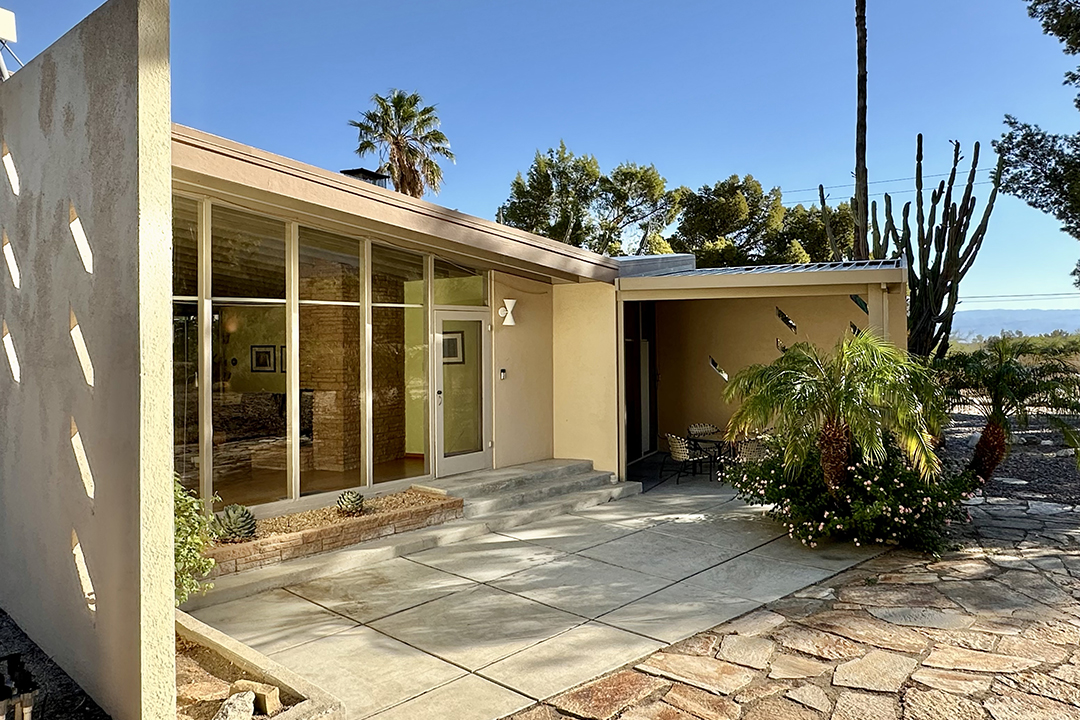
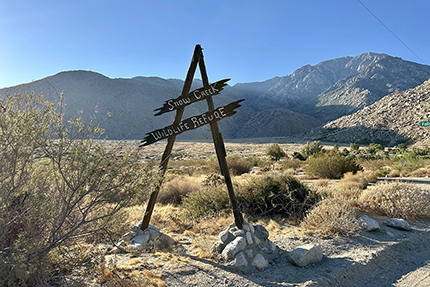
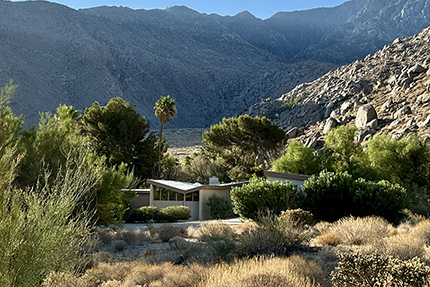
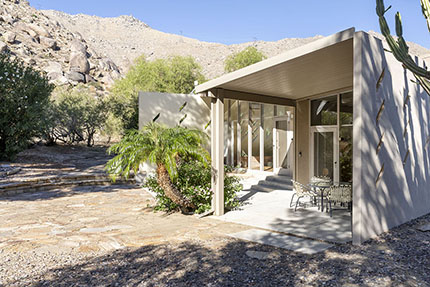
In Snow Creek, a remote suburb seven miles outside of Palm Springs, hidden among the boulder-strewn foothills of Mt. San Jacinto's north face, is an iconic mid-century home wearing the signature of architect John Lautner. A reproduction of Lautner’s Bergren Residence in Los Angeles, this desert echo has the character and language of the original, although there is no record of his involvement.
The original Bergren Residence in Los Angeles was commissioned by big band guitarist Ted Bergren, who hired John Lautner in 1951 to design a one-bedroom house on a steep hillside above Runyon Canyon in the Hollywood Hills. A compact bachelor pad, Lautner brought his design vocabulary to the space, using a chevron-shaped roofline, non-rectangular rooms, redwood framing, a central atrium, raised living spaces, and glass walls to erase the line between the living room and views of the San Fernando Valley beyond.
The Pirate Lautner
After a fire in 1957 damaged the house, Lautner was hired again to restore and expand the home—adding a second bedroom and bath. The Bergren Residence has since undergone several remodels over the years, each adapting the home’s original design, the most recent remodels attempting to restore some of its original character.
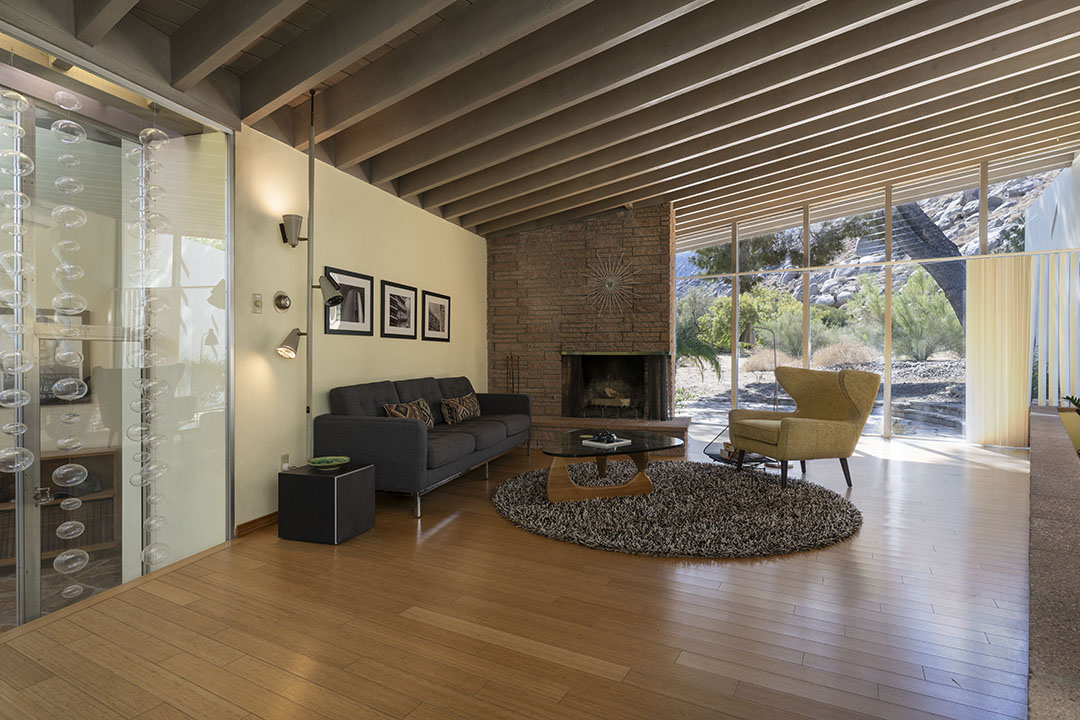
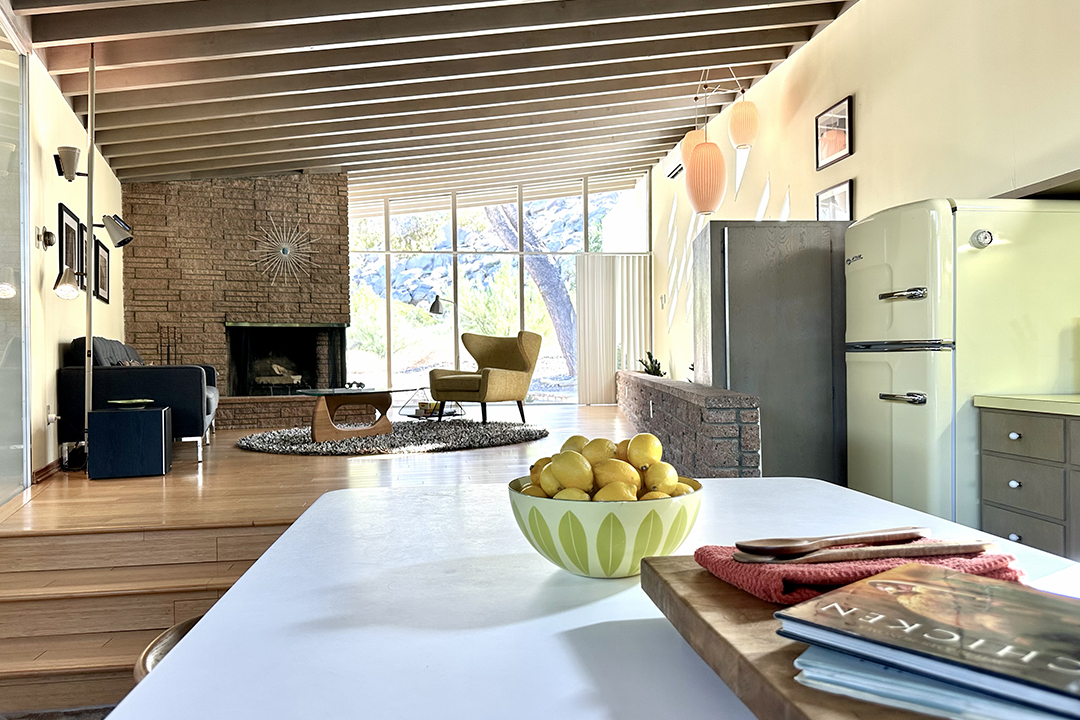
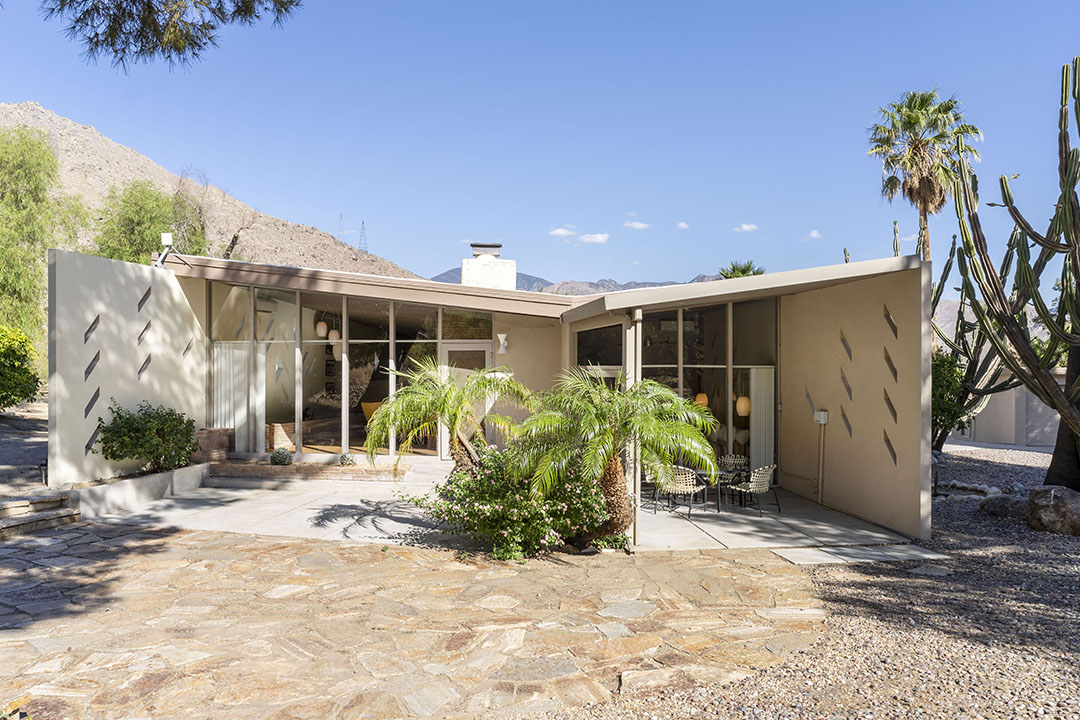
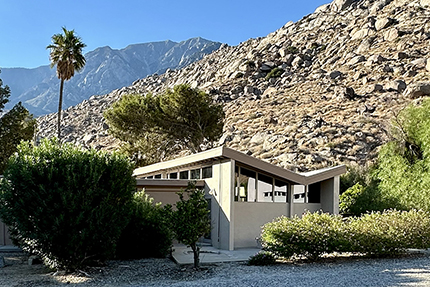
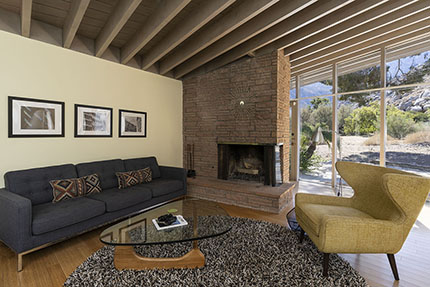
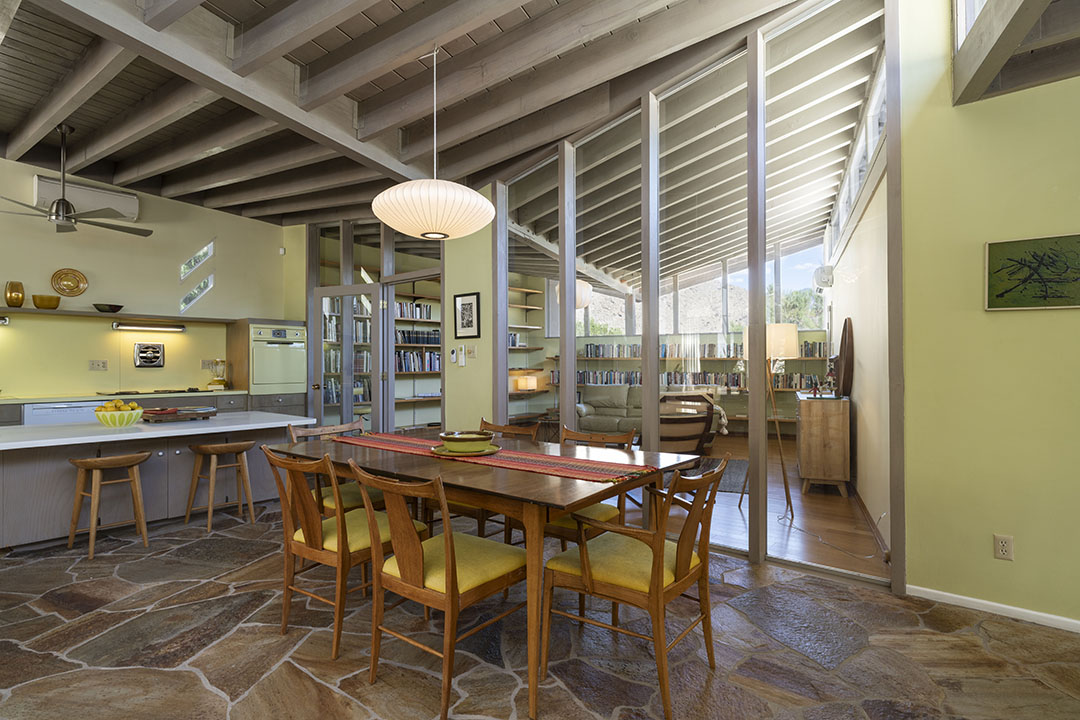
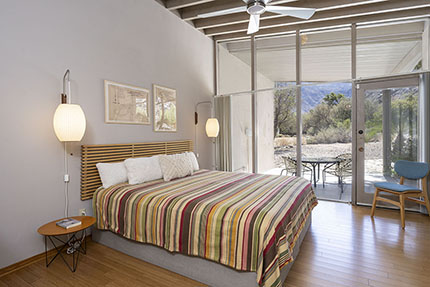
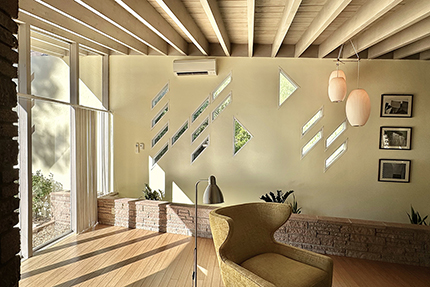
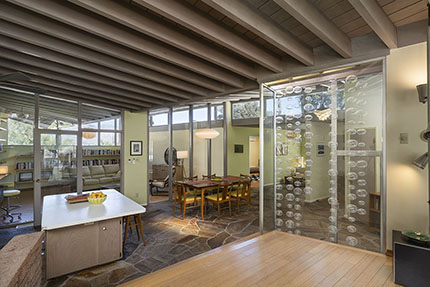
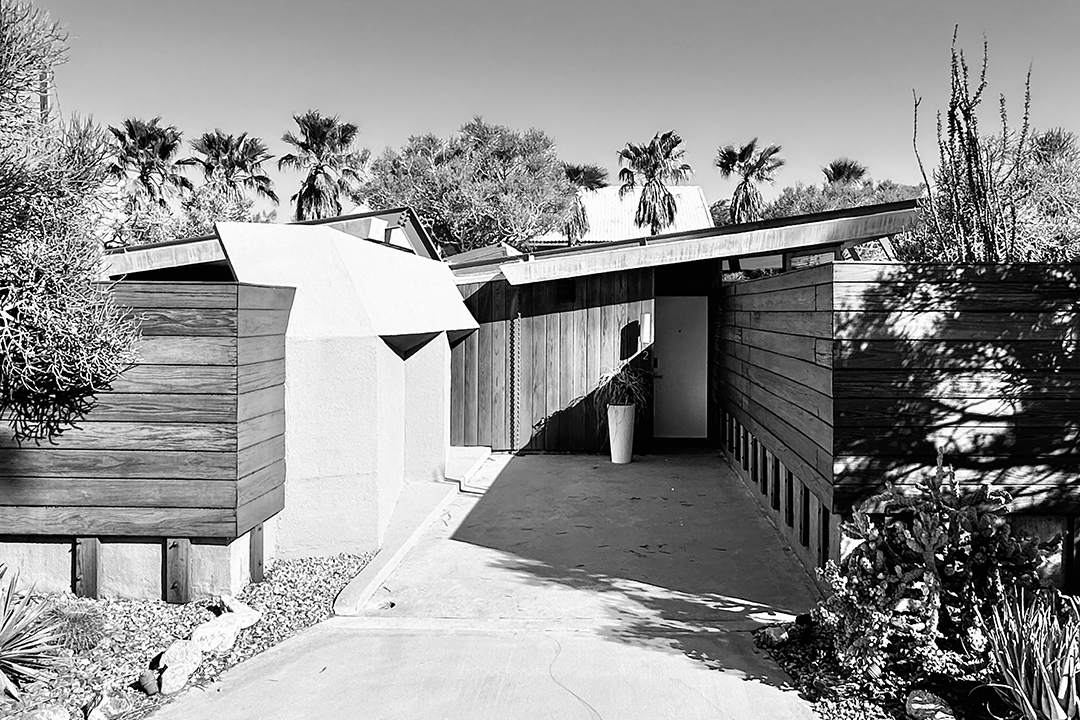
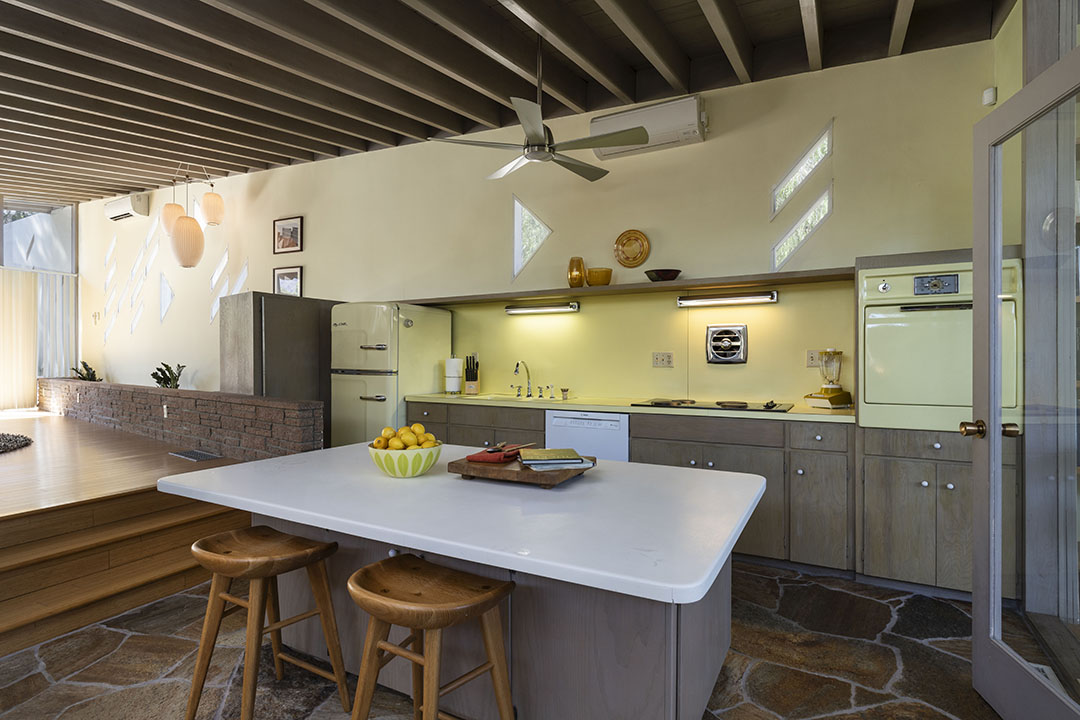
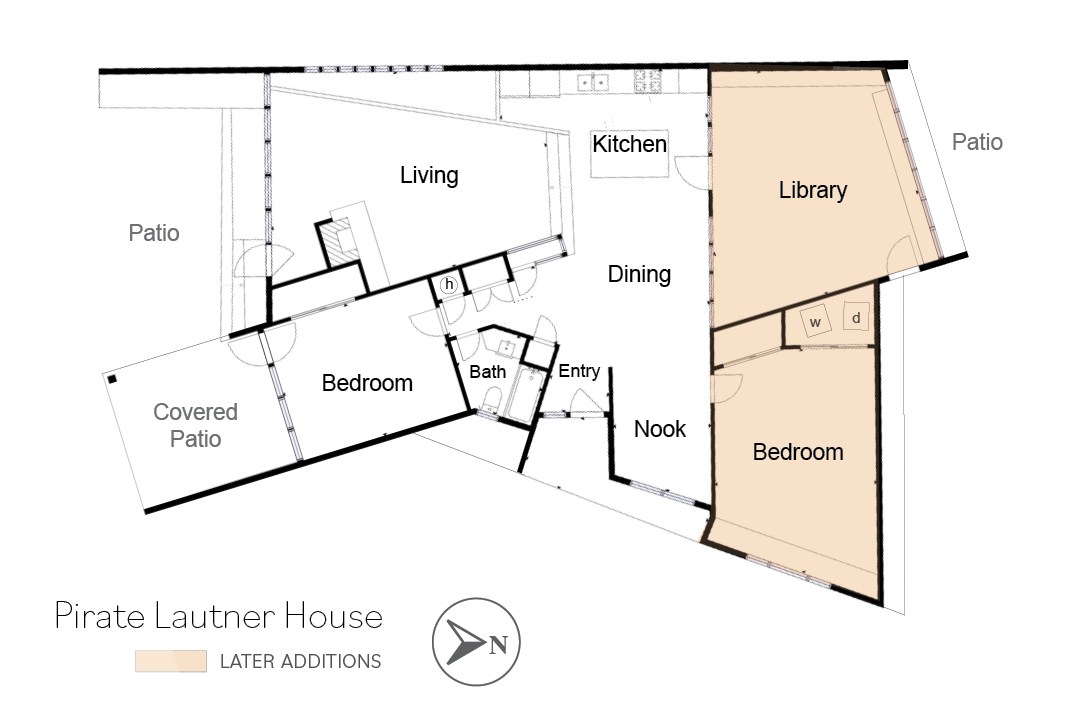
In 1958, nearly 100 miles to the east, a desert echo was constructed. Repeating the trademark design cues of the pre-fire floor plan, the desert project implements the identical swooping butterfly roof made of repeating wood beams recalling the hull of a ship. Its raised living room and a large fireplace meet a wall of glass at the stone hearth, this time erasing the barrier between the interior and the rugged beauty of the north face of Mt. San Jacinto beyond. Its central atrium and a long indoor brick planter, punctuated by cut-out windows like the original, bring nature indoors.
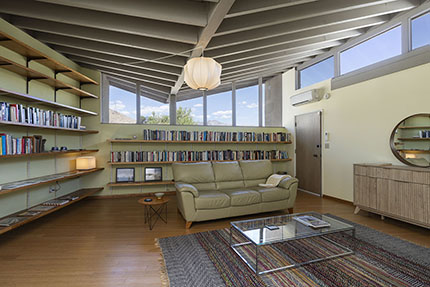
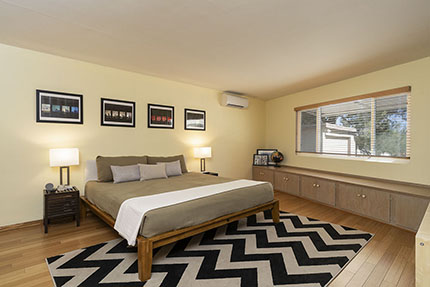
Two design changes have occurred since the home was originally built. A second bedroom has been added where the carport would have been. Also the back patio off the central kitchen and dining area is now a spectacular family room/library crowned with clerestory windows and a ceiling that effortlessly extends and original, repeating wood beam structure.
Although the desert replica cannot be verified as Lautner’s work, historians Jan-Richard Kikkert and Tycho Saaristen included it in their historical indexing of every surviving Lautner Building. In their book, Lautner A-Z: An Exploration of the Complete Built Work, they refer to this home as the “pirated house,” concluding it is more true to Lautner’s design than his now modified original in L.A. The question that remains is who owned and built this home during a time period that overlaps with John Lautner’s prolific design period in the California desert.
A Desert Homage
Who Built the Pirate Lautner
Snow Creek, now a subdivision of 49 homes, was once tribal land of the Cahuilla Indians used as a migratory route and seasonal home base for the tribe. The namesake of the area is based on a creek that once flowed through it but has long since been diverted. Around 1920 a group of Sicilian immigrant farmers were said to have tended sheep and olive trees in the valley - an olive grove still remains in the community. Eventually the land was sold by the tribal owners, making the land fee simple and easily resold.
There is a gap in the county records regarding Snow Creek land ownership and the pirate Lautner. However, it is clear by 1958 most of the land was primarily owned by the Palm Springs Water Company, a utility that brought water back to the area to promote development. The utility also created an independent business division named Snow Creek Cabin Sites, dedicated to leasing Snow Creek land for residential development. Sold lots as leasehold estates, they included a provision that buyers of vacant land must build a single-family residence within two years of the purchase, or the lease would be forfeited, reverting back to the utility company.
Since the leasehold sales were managed privately under the umbrella of the water utility, the land did not actually transfer ownership and therefore wasn’t recorded with the county. In 1968 the Desert Water Agency assumed the utility, and the Snow Creek Cabin Site leasehold business went into a private partnership until 1971, when the leasing company was dissolved to create the current Snow Creek Subdivision. The record of the first pirate Lautner owner disappeared entirely.
The first reference to the Pirate Lautner in the county's records is in 1965. The land lease and structure were sold to a new owner; however, there is no information on the seller who would have purchased in 1956 or 1957.
Factoring in John Lautner
In the 1950s the desert community was a small and intimate social environment where Hollywood elites, Los Angeles' industrialists, businessmen, and even organized crime figures mingled. Its reputation as an anonymous escape outside of the prying attention of the Los Angeles and Hollywood press made the desert a magnet for short-distance escapes. This created a social melting pot as well as a hotbed for mid-century design, with famous patrons hiring well-known architects to build second homes in the Palm Springs area.
By 1942, architect John Lautner, already well established in the L.A. market, had already begun spending time in the desert. His first design was the caretaker's cottage for the Astor Farm in Indio. In 1947 he began working on an ambitious design in Desert Hot Springs, known as Bubbling Wells, a 600-acre utopian desert town for director Lucien Hubbard. Because of the size of the project, Lautner visited the desert frequently. Although the project ultimately failed, the desert eventually became Lautner's second home for design, working on a variety of signature residential projects, requiring continued and frequent visits to the Coachella Valley.
Considering how closely the pirate Lautner matches the Los Angeles original, it seems understandable to assume a direct connection to Lautner’s design. The builder of the Snow Creek replica clearly admired Lautner’s work, and one can imagine that with the fluid social environment in the desert during this time, it is plausible the owner engineered meeting Lautner socially. If this happened, perhaps it included discussing the hope to reproduce the Bergren residence, maybe even asking Lautner’s help, either officially or unofficially. We may never actually know.
Some have suggested that the home had no connection at all and was simply created by reverse engineering from photos of Lautner’s original project. Julius Shulman, a prolific photographer of mid-century architecture during this period, had published photos of the Bergren residence, perhaps providing the means.
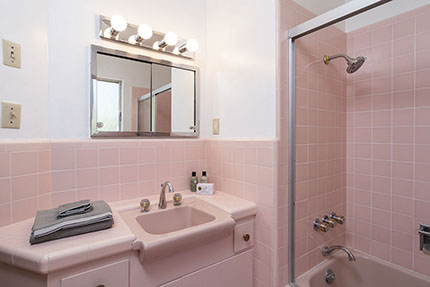
No matter the origin, the Pirate Lautner is an architectural gem. The desert echo implements the original Bergren design vocabulary perfectly, with dimensions that are strikingly true to the original. The pirate’s exquisitely maintained vintage condition also more accurately reflects the architectural heritage of the original, if only by virtue of having eluded remodels and modifications.
LAUTNER'S DESERT
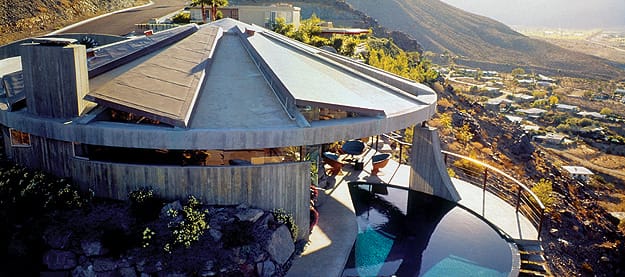
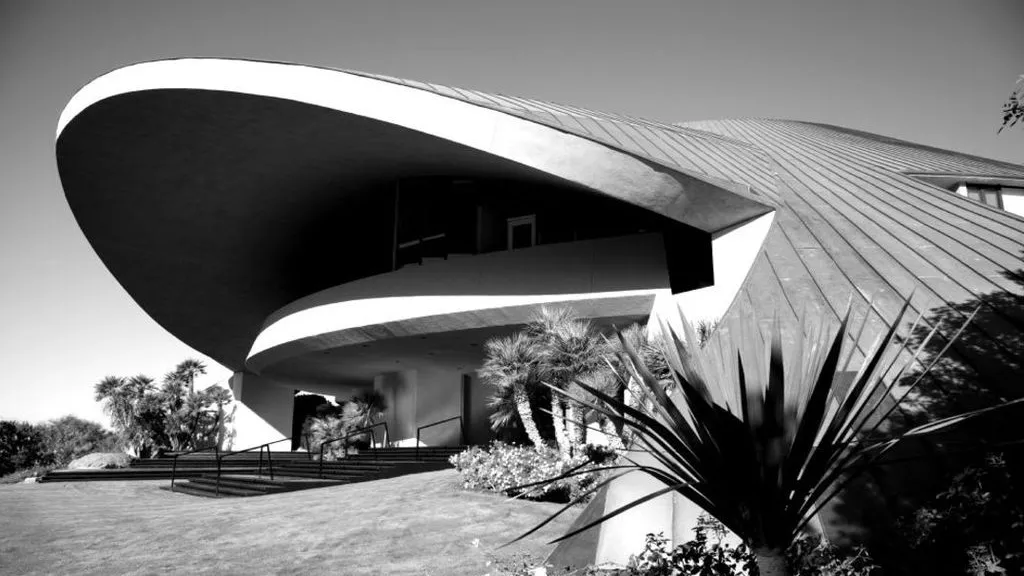
Other notable desert projects Lautner worked on over the years included the Elrod House (1968). Built into the boulders above Palm Springs for interior designer Arthur Elrod, this home was conceived to have a concrete sunburst roof over an expansive interior with exposed granite outcroppings inside the walls. In 1971 the home achieved notoriety as it was cast as a villain's lair in the Bond film Diamonds Are Forever. Then, between 1973 and 1979, Lautner designed the 23,000-square-foot Bob and Dolores Hope estate nearby in Southridge—his largest residential commission ever built.
By the time the Hope House was finished, Palm Springs and the foothills around it had become, alongside Los Angeles, the second place where Lautner's organic modernism found its fullest expression—terrain dramatic enough to let his architecture do what it did best: grow out of the land instead of sitting on top of it.
The Architect | Desert Time Line
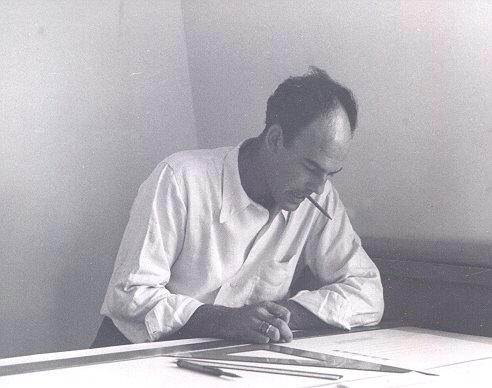
John Edward Lautner (1911–1994) apprenticed with Frank Lloyd Wright at Taliesin before opening his own Los Angeles practice in 1938. He's remembered for the Googie style and for the Atomic Age houses of the late 1950s and early '60s — the Malin ("Chemosphere"), Sheats-Goldstein, and Garcia houses among them — and, later, for the boulder-set, glass-walled houses that made Palm Springs a second home base for his organic modernism.